Physical Address
304 North Cardinal St.
Dorchester Center, MA 02124
Physical Address
304 North Cardinal St.
Dorchester Center, MA 02124

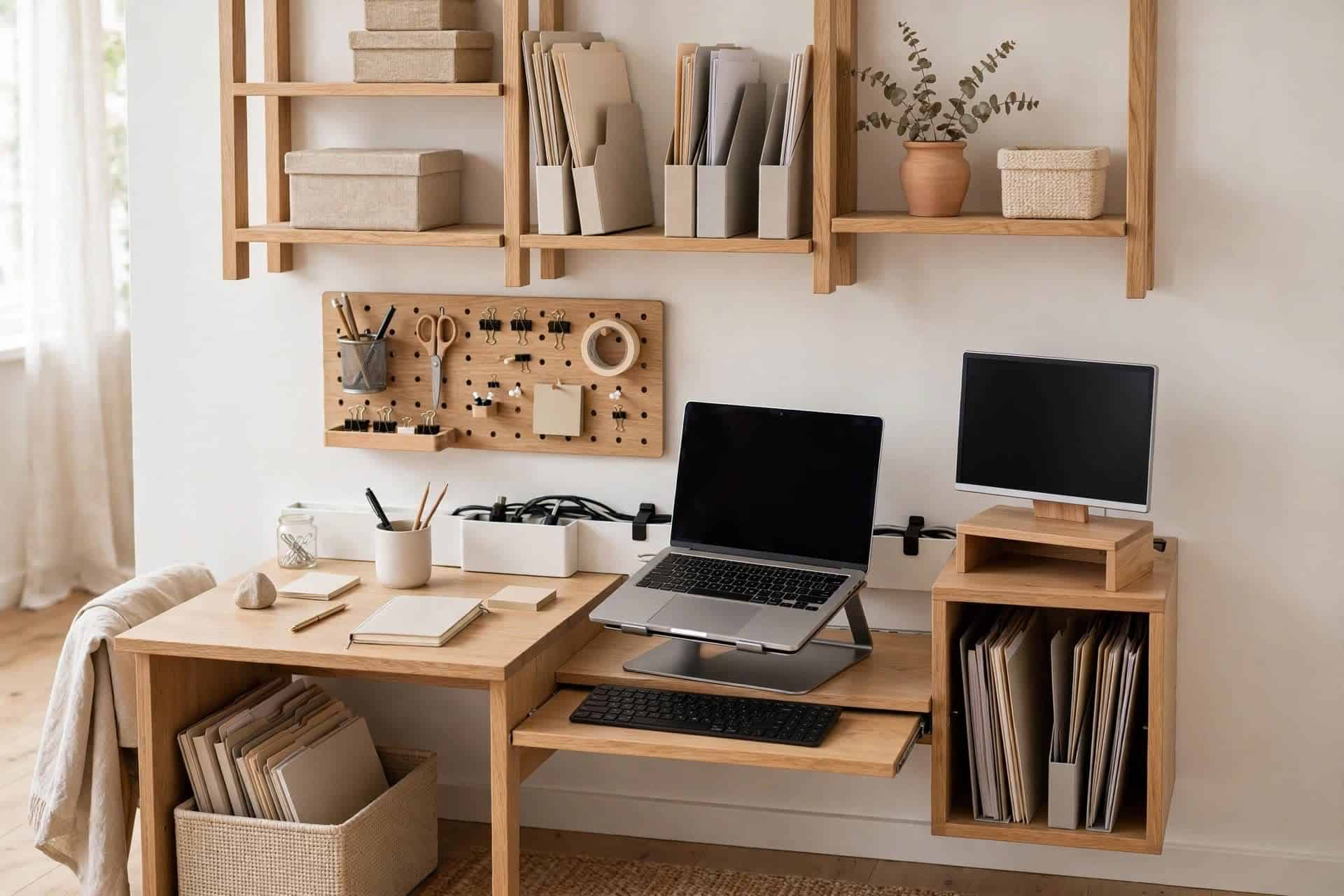
A small workspace doesn’t have to feel chaotic.
Whether you work from home, study, manage a small business or simply need somewhere to use your computer, organisation can make a limited space considerably more practical.
Here are some simple ways to improve a small home office.
Remove things you don’t use
Start by clearing your desk.
Remove old papers, empty packaging, unused stationery and equipment that you rarely touch.
A smaller workspace benefits from being selective about what remains on the desk.
Keep frequently used items within easy reach and move everything else into storage.
Use vertical space
When floor and desk space are limited, look upwards.
Shelves can provide storage without taking up additional desk surface.
Wall-mounted organisers, pegboards and shelving systems can also provide places to store stationery and small equipment.
Before installing anything on a wall, however, check that the wall and mounting hardware are appropriate for the intended load.
Keep the desk surface clear
A clear desk is easier to work on.
Instead of keeping everything on the surface, consider using a drawer organiser, storage box or desk organiser.
You don’t have to eliminate everything from the desk. The goal is simply to ensure that every item has a sensible place.
Manage your cables
Cable clutter is one of the quickest ways to make a small office look untidy.
Identify which cables you actually need and remove unnecessary ones.
Cable clips, sleeves and cable-management boxes can help keep the remaining cables under control.
Labeling cables can also be useful if you regularly disconnect equipment.
Use multi-purpose accessories
When space is limited, products that perform more than one useful function can be valuable.
For example, a monitor stand with storage space underneath can raise a screen while creating additional room for small accessories.
Similarly, a desk organiser with several compartments can replace multiple small storage containers.
Consider a laptop stand
A laptop stand can free up desk space underneath the computer and allow you to use a separate keyboard.
This can be particularly useful when working at a small desk.
Choose a stand that is stable and suitable for the size and weight of your laptop.
Store documents properly
Paper can quickly take over a small workspace.
Instead of allowing documents to accumulate on your desk, use folders, magazine files or document storage boxes.
Create simple categories so you can find important papers without searching through a pile.
Create zones
Even a small desk can have different areas.
For example:
• Computer area
• Writing area
• Stationery area
• Charging area
Creating zones helps prevent items from spreading across the entire workspace.
Review your setup regularly
Organisation isn’t something you do once and forget.
Every few weeks, look at your workspace and ask:
“What is making this area difficult to use?”
If something isn’t helping, remove it or find a better place for it.
Final thoughts
You don’t need a large room to create an organised home office.
Use vertical space, control cables, reduce clutter and choose storage products carefully.
Most importantly, organise the workspace around how you actually work. A practical small office will always be more useful than an expensive setup that doesn’t fit your routine.